A man named Clifford Robertson is eating his lunch in the back of a fertility clinic’s transport van when he knocks over a refrigeration tray. Twelve frozen embryos are destroyed. Under a new state law that treats embryos as legal persons from the moment of conception, he is charged with 12 counts of manslaughter.
That is the setup of “The Plea,” a black-and-white drama directed by Zach LeBeau and Dean Imperial, who wrote it with Scott Organ and also play two of the jurors. It’s having its world premiere this week at the Woodstock Film Festival in New York’s Hudson Valley (Oct. 14 to 18), and I was sent an early screener. I went in excited about the premise and, to be honest, with fairly low expectations. I came out with a lot to say.
First, a confession. “The Plea” is loosely built on “12 Angry Men,” Sidney Lumet’s 1957 jury drama, and I have never seen “12 Angry Men.” I know. I did some reading before I pressed play, but this review takes the film on its own terms, which might be fair anyway, since plenty of people watching it won’t have seen the original either.
A room full of America
The film opens with Norman Greenbaum’s “Spirit in the Sky” playing over a montage of political and religious footage, and it sets the tone right away. You know within a minute that this is a movie about belief, and about how loud belief has gotten.
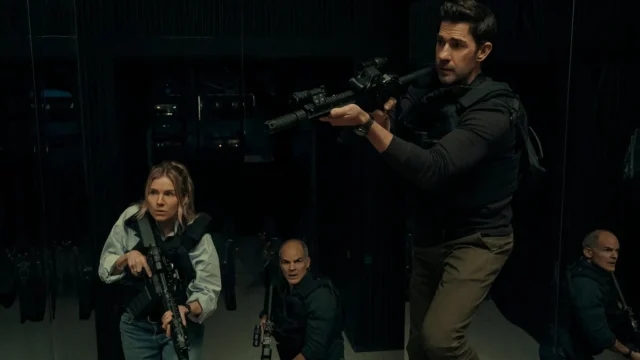
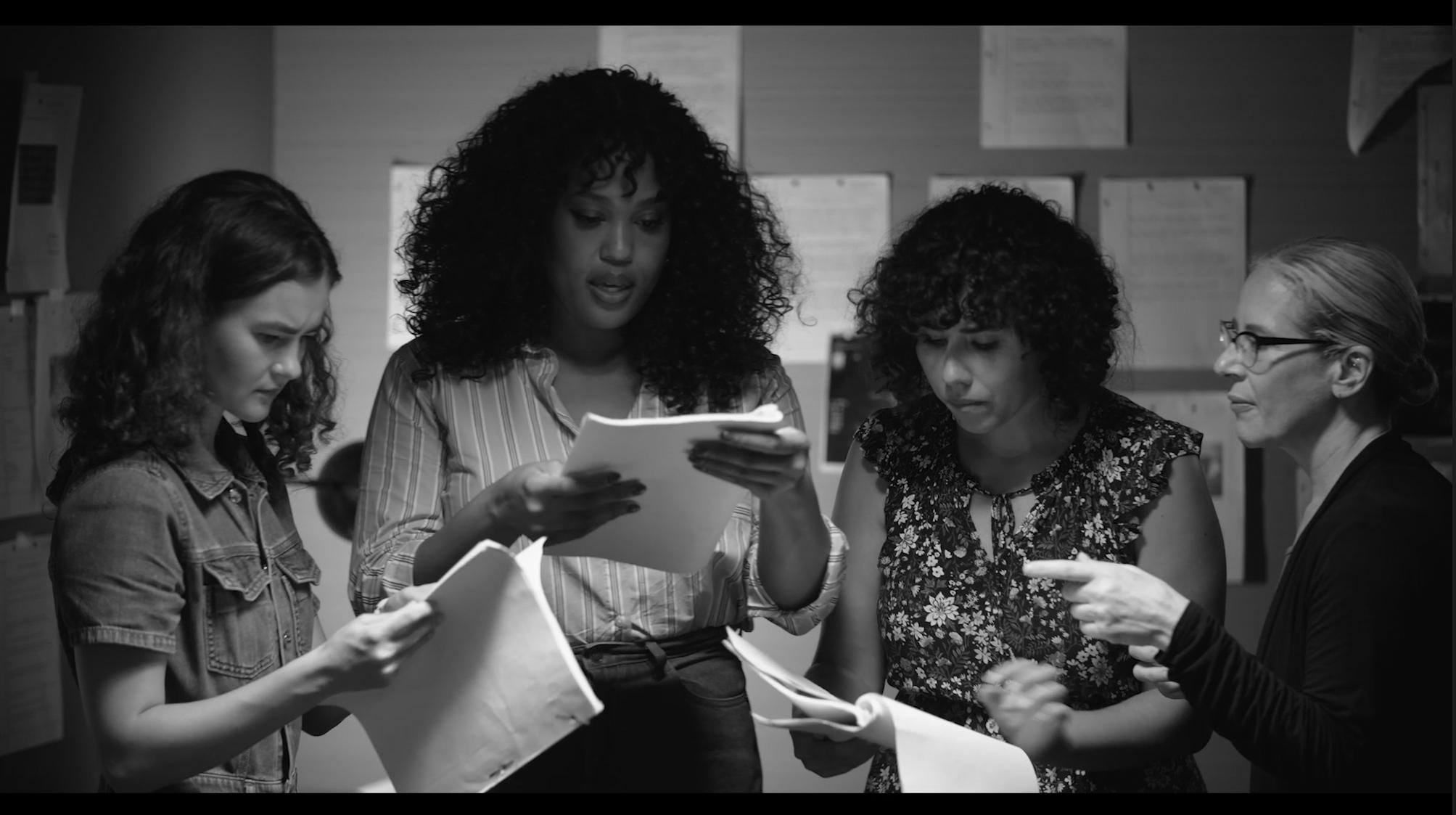
From there, 12 jurors are sequestered in a hotel. A bailiff takes their phones, laptops and smartwatches, cuts off the TV and the internet, and bans their real names, so they go by Juror 1 through Juror 12. Protesters from every side of the issue surround the building.
Each juror stands in for a slice of the country. There is a loud contractor who hates smartphones, a Hollywood actor, an anxious Gen Z woman, a doctor, a progressive activist, a devout Christian, a rule-obsessed psychotherapist running the room and a quiet widower. Because they span so many generations, almost anybody can find someone to recognize in this group.
The cast is stacked for an independent film. Millicent Simmonds, the daughter from “A Quiet Place,” plays a deaf juror who communicates through an interpreter, and she is one of the sharpest presences in the movie. Kathryn Erbe, best known as Detective Alexandra Eames on “Law & Order: Criminal Intent” (and as Anna in “What About Bob?”), plays the Christian juror. Dennis Boutsikaris, the lawyer Rich Schweikart from “Better Call Saul,” plays the widower. Antoinette Crowe-Legacy plays the activist, and Gbenga Akinnagbe, Chris Partlow from “The Wire,” is also in the cast.
Where it works, and where it wanders
The jury room is where this movie is alive. When those 12 people are arguing, I was leaning in. The first vote splits the room, tempers flare almost immediately and it genuinely feels like anything could happen.
And so I was surprised by how often the film leaves that room. Most of the runtime happens in the hotel bar and in the jurors’ rooms, and some of the deliberation is talked about afterward rather than shown. I’m not sure why the filmmakers made that choice. My guess is they wanted to show who these people are when the bailiff isn’t watching, and a few of those scenes do land. Personally, though, I was itching for more jury action the whole time.
The bigger issue for me is that some characters sound less like people and more like positions. You can tell when a line exists because the writers wanted a viewpoint represented. I don’t necessarily mind that in a movie, but I wanted to connect with these people emotionally, and it kept holding me at arm’s length. Over time I did warm up to a couple of them.
The Christian juror is the clearest example. Kathryn Erbe plays her consistently, and her grief gives the character real weight. But the way she talks about faith and about life beginning at conception isn’t how the believers I know actually talk about it. I’m a Christian, and I found myself shaking my head and saying “that’s not how we’d say that” out loud. I suspect people who are pro-life or pro-choice will have the same reaction to their own side at different points.
The festival describes the film as a satirical noir, and to be fair, if you take the characters as satire, the broad strokes make more sense. Its politics lean left, but the movie is cynical about pretty much everyone in power, partisan or not, which made it more interesting than I expected.
A movie that made me feel everything
I can’t think of a recent film that put me through this many emotions. Some of it wasn’t the good kind. There were lines and line readings that made me cringe, and I yelled at the screen more than once. But I was never bored, and I was always reacting.
A heads-up for parents: this is not a family film. There is a lot of profanity and some frank sexual dialogue, so it isn’t one for younger viewers.
Then there’s the ending. I won’t spoil it. I was about halfway through thinking this probably wasn’t for me, and the ending kind of made the whole movie. It reframes everything before it, and I’ll be thinking about it for days, maybe a week. For me, that’s usually the sign of a film worth seeing.
The verdict
“The Plea” is rough around the edges and it isn’t an amazing film. I wish it had trusted the jury room more, and I wish a few of its characters felt like people instead of arguments. But it takes on one of the most important issues of our time, it does it in a way I haven’t seen before, and it gave me an ending that stuck.
I’m giving it 3.5 out of 5. It’s almost a four. Something is just missing that keeps it from getting there.
It’s not for everybody, especially if you don’t like talky movies. If you want a film that makes you think and argue, watch it with friends. You will be talking about it the whole way home.
If you want more honest reviews like this one, follow along on Instagram, TikTok and YouTube at The McAuley Tucker Show. Thank you so much for reading.